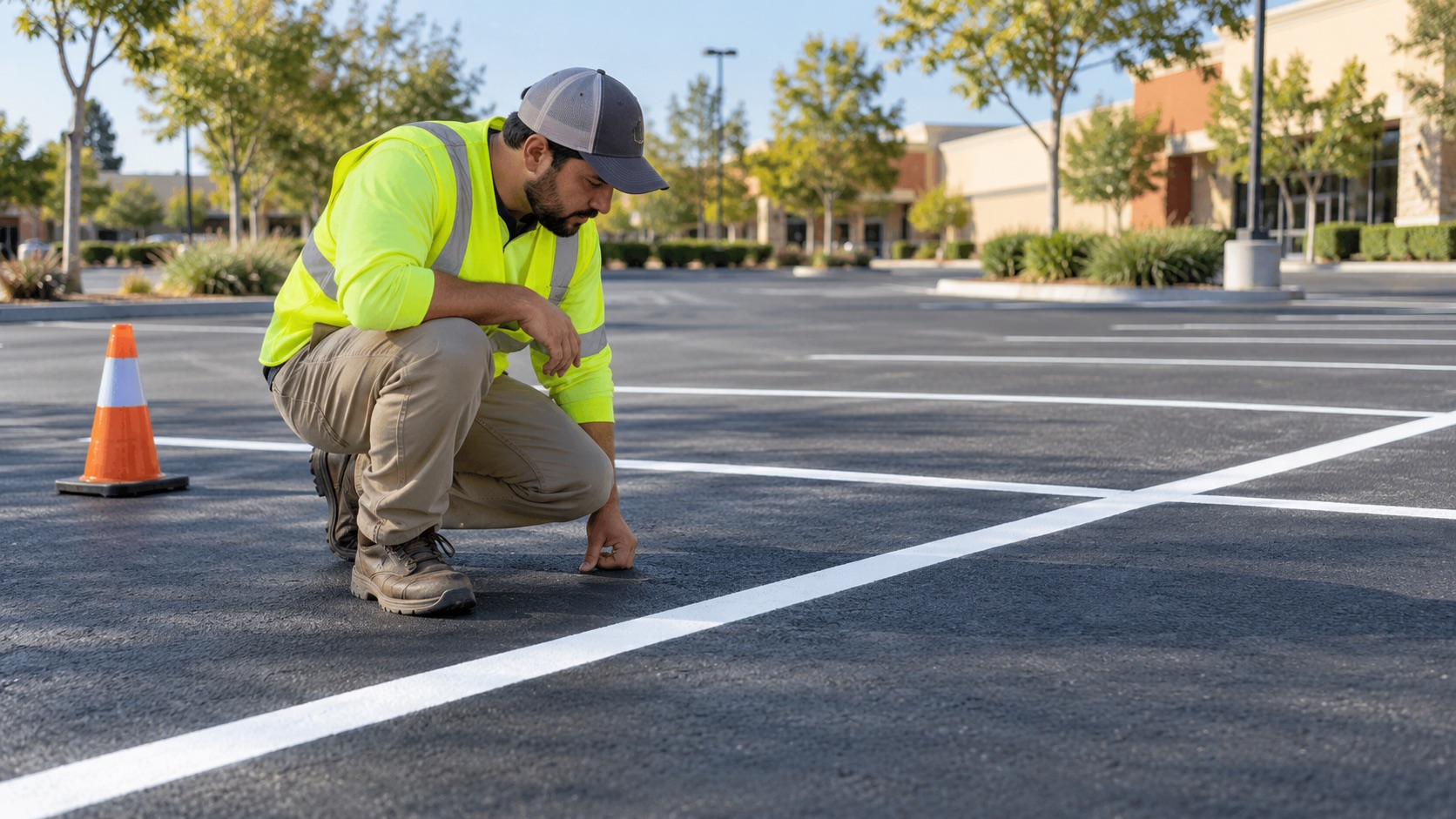
What is the short answer?
Some traffic-marking products publish no-pickup times measured in minutes under specific laboratory or field conditions, while others may require closer to an hour or more. That number is not an automatic reopening promise. Keep vehicles and pedestrians out until the applied material is dry or hard enough for the expected traffic and the contractor releases the area.
Why do published dry times vary?
Traffic-marking products use different chemistries and application requirements. Film thickness, pavement temperature, air temperature, humidity, wind, shade, surface moisture, color, and the condition of the pavement can all change performance. A time printed for one product under stated conditions should not be transferred to another product or a different day.
What does “dry to no pickup” mean?
No-pickup or no-track time generally describes the point when a vehicle tire should not lift and transfer the marking material under the specified test conditions. It is more useful than “dry to touch” for traffic markings, but it still depends on correct application and actual site conditions. The work zone should remain protected until the project-specific reopening standard is met.
How does Sacramento weather affect drying?
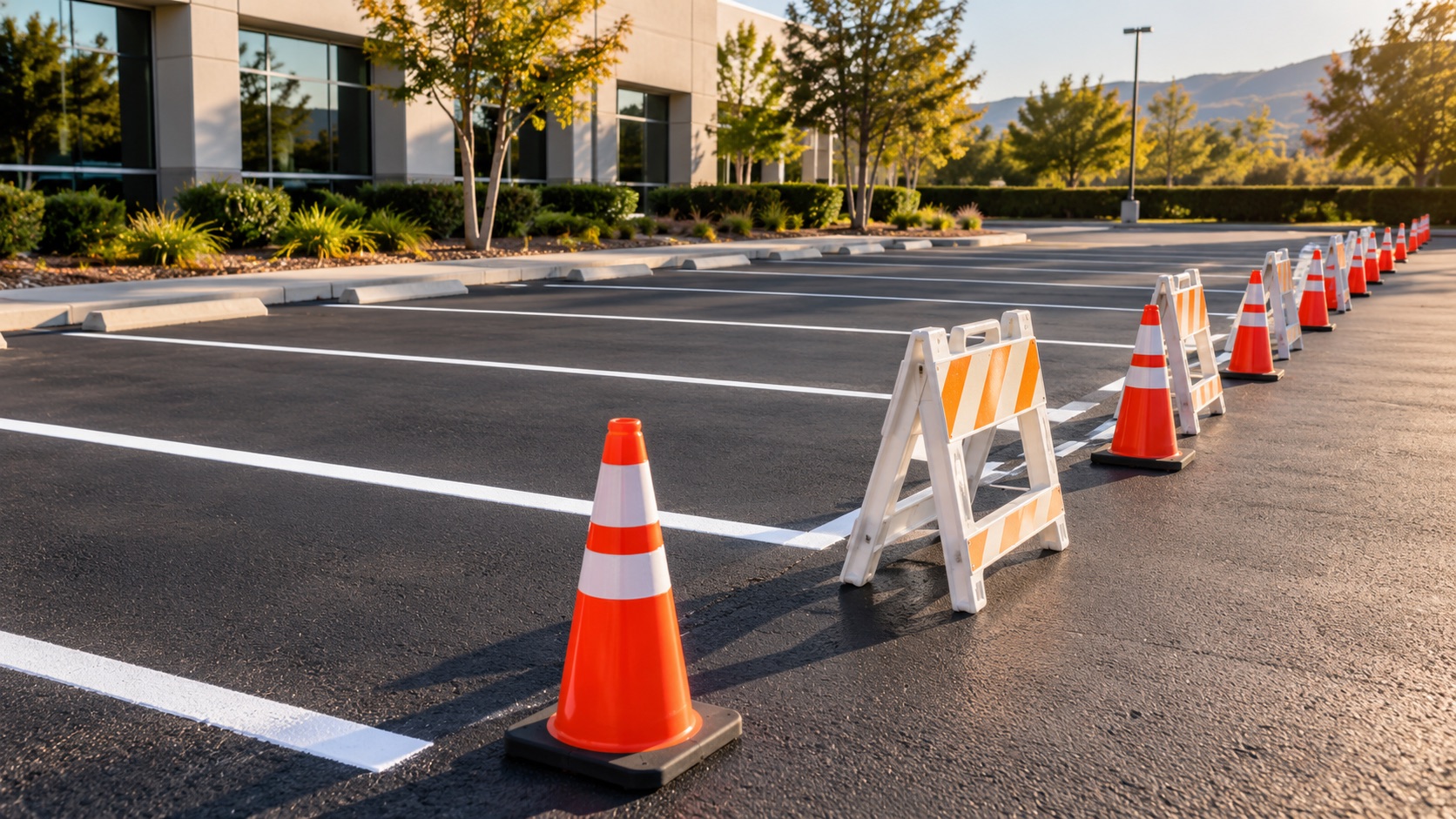
A warm, dry Sacramento afternoon can be very different from a cool morning, shaded lot, humid evening, or a day with rain or condensation risk. Caltrans guidance illustrates why contractors document temperature and expected weather and avoid application when rain, fog, or condensation could damage fresh markings. Private parking-lot requirements may differ, but the same practical variables matter.
Does new asphalt or sealcoating change the schedule?
Yes. The underlying surface and the work completed before striping can affect when marking begins and how the coating performs. New pavement, sealcoat, repairs, cleaning, or old-marking removal may have separate cure or readiness requirements. Ask for the full sequence, not only the paint dry time.
Can customers walk across fresh parking lot lines?
Pedestrian access should follow the same controlled reopening plan. A marking that appears dry may still be vulnerable to scuffs, contamination, or transfer. Keep people, carts, deliveries, and vehicles out of the marked work zone until it has been released, and provide an alternate route where needed.
How should a business plan around the drying window?
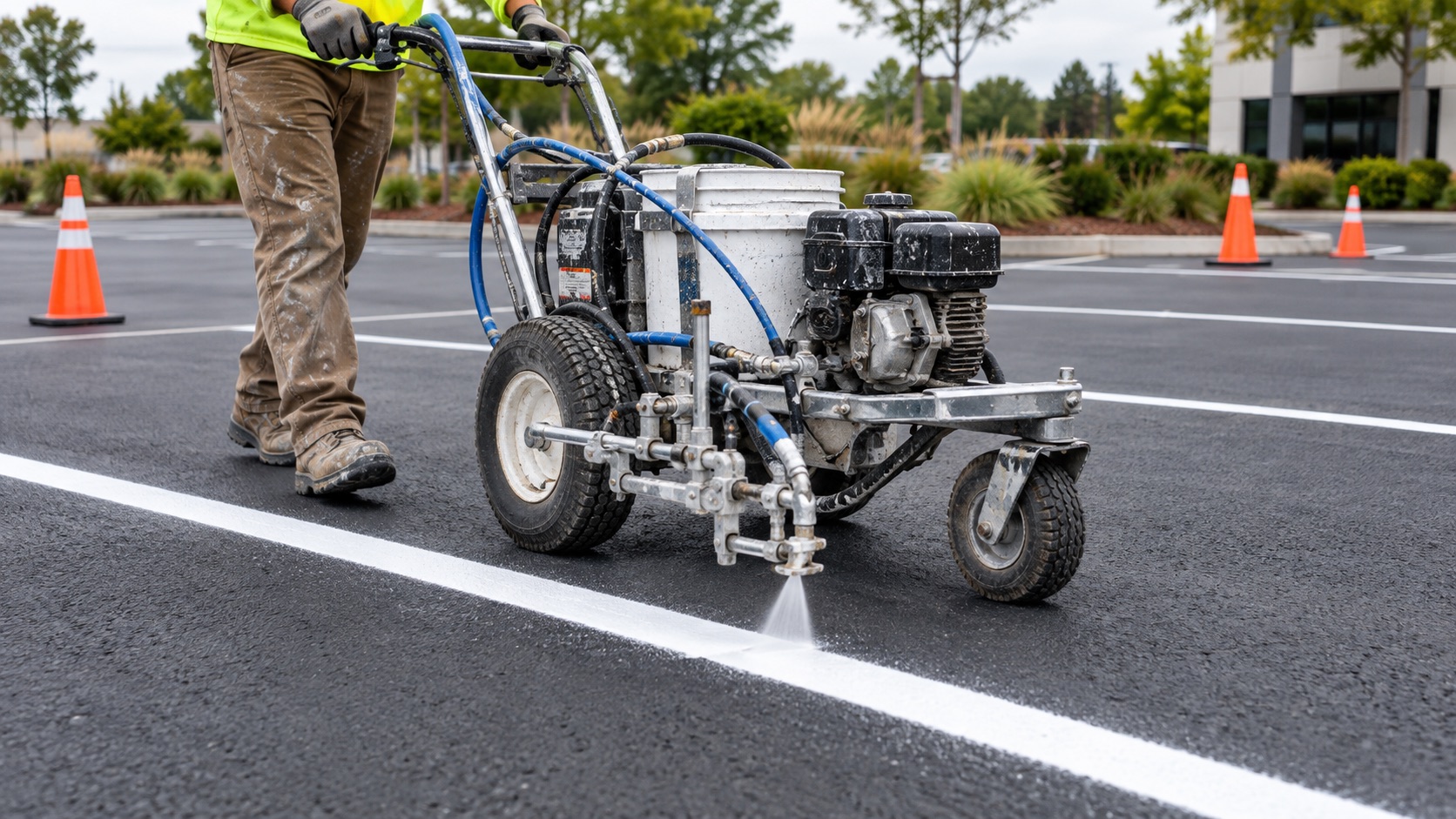
Identify operating hours, delivery periods, tenant traffic, overnight vehicles, required entrances, and pedestrian routes before scheduling. The contractor can then discuss after-hours work, phased zones, barriers, notices, and a weather backup plan. Build more time into the notice than the best-case product number.
What should property managers ask before reopening?
Ask which marking material is being used, what conditions its published time assumes, what could delay drying, how the area will be protected, who has authority to release it, and how a schedule change will be communicated. Do not move cones or reopen a zone based only on elapsed clock time.
Parking lot striping dry-time FAQ
How long does parking lot striping take to dry?
Published no-pickup times can range from minutes to an hour or more depending on the product and stated conditions. Reopen only after the applied material is ready for the expected traffic and the contractor releases the area.
Can cars drive on parking lot paint when it feels dry?
Not necessarily. Dry to touch is not the same as ready for vehicle traffic. Tires can track, smear, or lift material that appears dry on the surface. Follow the project-specific reopening instruction.
Does hot Sacramento weather make striping paint dry faster?
Temperature can affect drying, but heat alone does not determine reopening. Pavement temperature, humidity, film thickness, product, shade, wind, and surface conditions also matter.
What can delay parking lot striping from reopening?
Cool pavement, high humidity, shade, rain or condensation risk, thick application, surface moisture, preparation issues, and another coating beneath the markings can all affect the schedule.
Research and guidance
Product times are examples, not a project promise. Always use the selected product data and the actual site conditions. Caltrans road specifications do not automatically govern a private parking lot; they are included as technical context for weather, curing, and traffic protection.
General planning guidance, not legal advice. Your property’s conditions and project requirements should be reviewed individually.